
PlantPhenoBot: robotics for plant phenotyping
PlantPhenoBot is the lab’s newest funded project. It is a robotics project for plant phenotyping, the measurement of plant traits such as growth, architecture, and stress response. The project began in May 2026 under a UGC–DU research grant, in collaboration with Gazipur Agricultural University.
At a glance
- Status: Ongoing (started 7 May 2026)
- Funding: UGC–DU research grant
- Collaborator: Gazipur Agricultural University
- Principal investigator: Dr. Md Mehedi Hasan
- Area: Robotics, plant phenomics
Why phenotyping needs robots
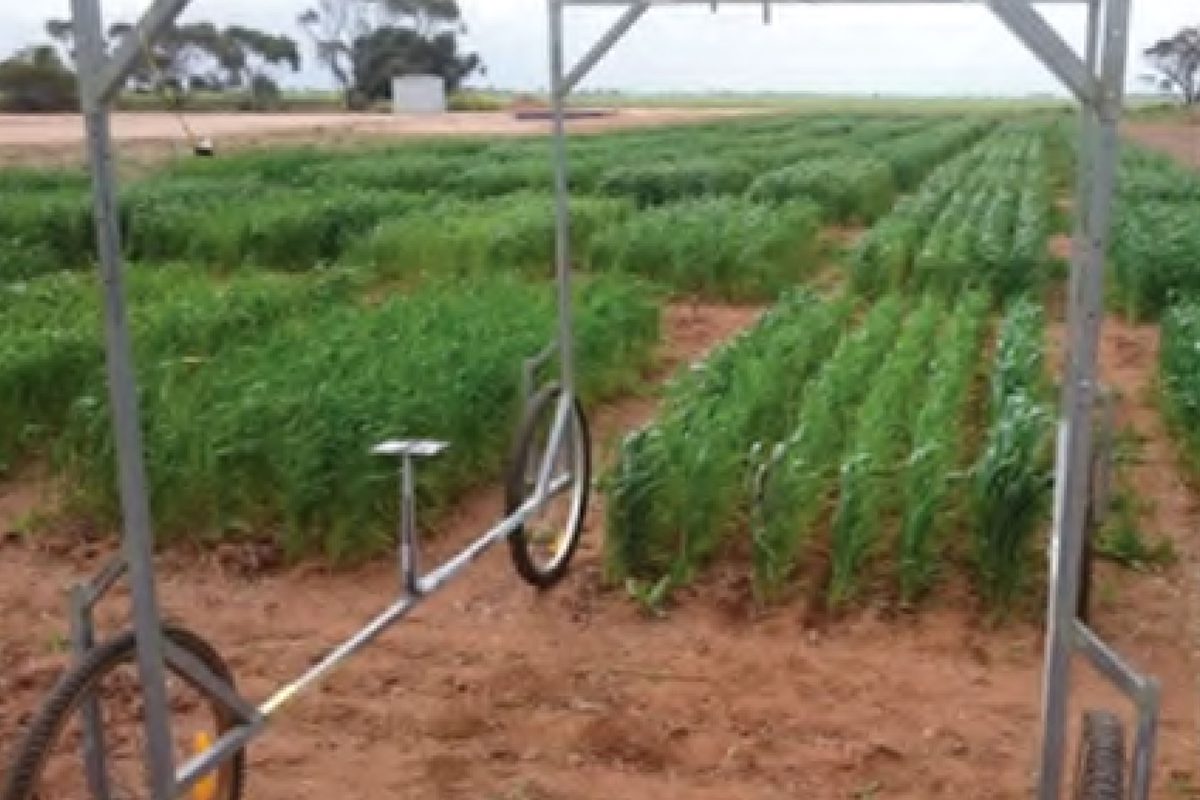
Crop breeders choose new varieties by measuring traits plant by plant: how fast a plant grows, how many spikes or bolls it sets, and how it copes with drought, heat, or disease. Done by hand, this is slow, subjective, and hard to scale beyond a few plots. Robots and imaging platforms can collect the same measurements automatically and consistently, at far higher throughput. This is high-throughput phenotyping, and it is one of the main bottlenecks between plant science and better crops.
Building on years of phenotyping work
PlantPhenoBot draws on a long line of AVIS Lab research in plant phenomics:
- Wheat spike detection and segmentation. Dr. Hasan’s 2018 Plant Methods paper on detecting wheat spikes with CNNs, followed by WheatSpikeNet (Frontiers in Plant Science, 2023) and a multi-stage CNN for spike analysis (DUJASE, 2023).
- Seedling monitoring. Cotton seedling growth-stage classification from UAV and ground-level imagery, with a biologically grounded Composite Stress Index (Smart Agricultural Technology, 2025).
- Disease diagnosis. PlantCareNet (Plant Methods, 2025) and SugarcaneShuffleNet, a very fast model for on-device diagnosis of sugarcane leaf diseases.
- Expert-style reasoning. PlantInquiryVQA (Findings of ACL 2026), a benchmark that tests whether multimodal models can question a leaf image the way a botanist does.
We’ll post updates here as the project progresses.